

时间:2025-09-30 09:29
来源:康恒环境
城市生活垃圾总量的高速增长,及公众对于废弃物管理的高期待,正成为全球多数城市面临的重要课题。近日,国际固体废物管理协会(ISWA)《Waste Management World》 杂志9月版(2025年第三期),深度剖析了来自中国西安的成功经验。
文章通过康恒西安高陵项目全面研究,展示了康恒WtE项目如何改写行业规则——从高效协同、卓越运营、AI共生到打造社区引以为傲的资产,为全球城市固废管理提供了标杆范本。
注:《Waste Management World》是全球唯一一本全面关注废弃物和资源行业各方面发展与创新的杂志。作为ISWA官方杂志,该杂志是废弃物服务公司、废弃物产生者、政策制定与决策者获取高价值内容的重要来源,在行业内具有广泛的影响力,对推动废弃物管理行业的发展和交流起到了重要作用。
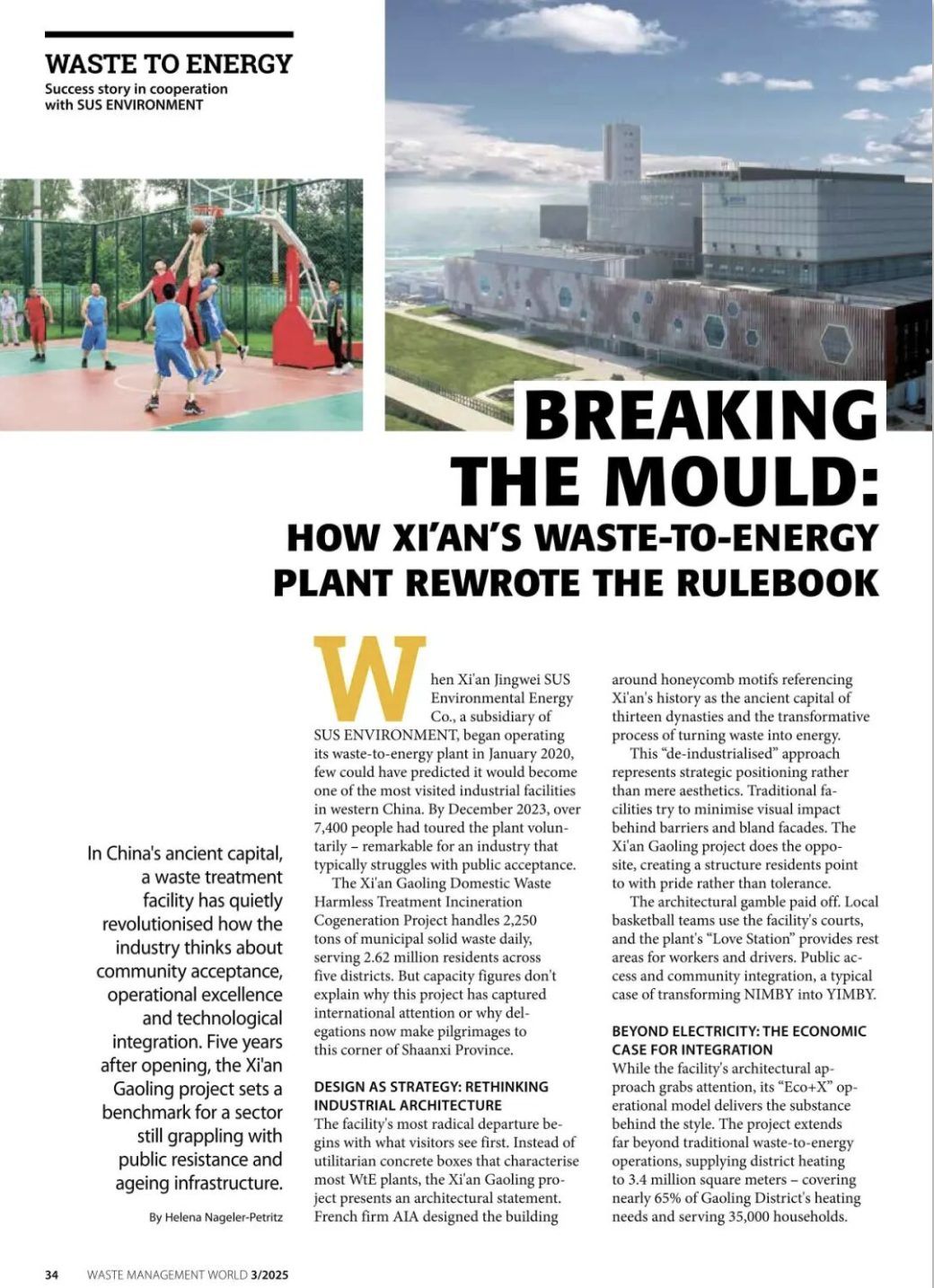
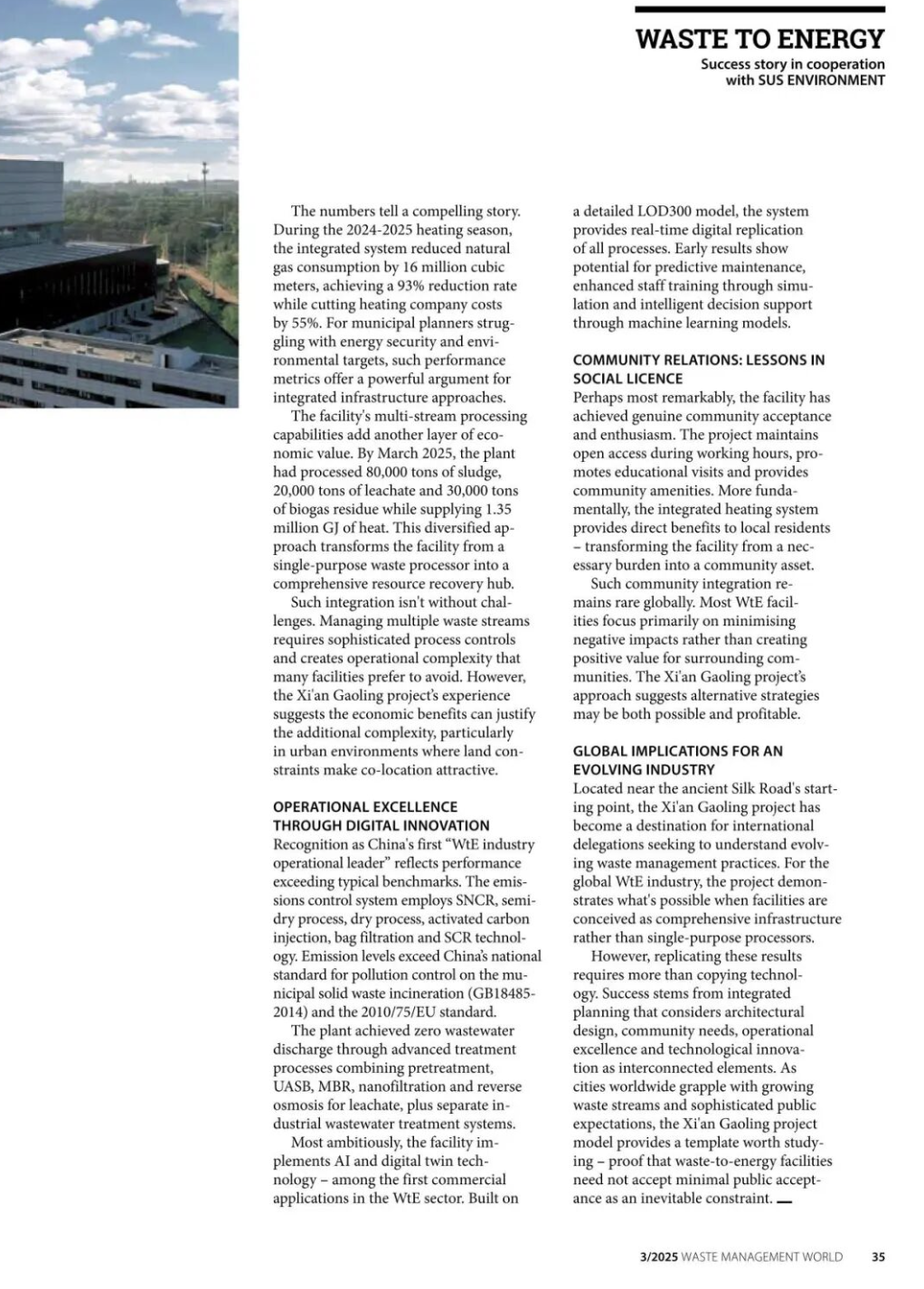
▲《WMW》杂志9月版(2025第三期)康恒报道版面截图
以下是《WMW》报道原文与中文译版整理:
BREAKING THE MOULD:HOW XI’AN’S WASTE-TO-ENERGYPLANT REWROTE THE RULEBOOK打破常规:西安垃圾焚烧发电厂如何重塑行业规则
In China's ancient capital, a waste treatment facility has quietly revolutionised how the industry thinks about community acceptance, operational excellence and technological integration. Five years after opening, the Xi'an Gaoling project sets a benchmark for a sector still grappling with public resistance and ageing infrastructure. ——By Helena Nageler Petritz
在西安这座古都,有一座垃圾处理厂正悄然改变着行业对社区认可、运营水准和技术融合的看法。西安高陵项目投用五年,为仍受公众质疑、基础设施老旧的行业树立了新标杆。 文/海伦娜·纳格勒·佩特里茨
When Xi'an Jingwei SUS Environmental Energy Co., a subsidiary of SUS ENVIRONMENT, began operating its waste-to-energy plant in January 2020, few could have predicted it would become one of the most visited industrial facilities in western China. By December 2023, over 7,400 people had toured the plant voluntarily-remarkable for an industry that typically struggles with public acceptance. The Xi'an Gaoling Domestic Waste Harmless Treatment Incineration Cogeneration Project handles 2,250 tons of municipal solid waste daily, serving 2.62 million residents across five districts. But capacity figures don't explain why this project has captured international attention or why delegations now make pilgrimages to this corner of Shaanxi Province.
2020年1月,康恒环境旗下的西安泾渭康恒环境能源有限公司,开始运营其垃圾发电厂时,鲜有人能预料到它会成为中国西部最受关注的工业设施之一。截至 2023 年 12 月,已有超 7400 人自愿参观该工厂 —— 这在通常面临公众接纳难题的行业中,实属罕见。西安高陵生活垃圾无害化处理焚烧热电联产项目,每日处理 2250 吨城市固体废物,服务五个行政区的 262 万居民。但产能数据无法解释该项目缘何吸引国际关注,又为何引得各地代表团纷纷前往陕西这一区域参观。
DESIGN AS STRATEGY: RETHINKING INDUSTRIAL ARCHITECTURE以设计为策略:重新审视工业建筑
The facility's most radical departure begins with what visitors see first. Instead of utilitarian concrete boxes that characterise most WtE plants, the Xi'an Gaoling project presents an architectural statement. French firm AIA designed the building around honeycomb motifs referencing Xi'an's history as the ancient capital of thirteen dynasties and the transformative process of turning waste into energy. This "deindustrialised" approach represents strategic positioning rather than mere aesthetics. Traditional facilities try to minimise visual impact behind barriers and bland facades. The Xi'an Gaoling project does the opposite, creating a structure residents point to with pride rather than tolerance. The architectural gamble paid off. Local basketball teams use the facility's courts, and the plant's "Love Station" provides rest areas for workers and drivers. Public access and community integration, a typical case of transforming NIMBY into YIMBY.
该设施最彻底的突破,始于访客第一眼所见之物。与大多数垃圾发电厂千篇一律的实用主义混凝土建筑不同,西安高陵项目呈现出极具建筑设计感的面貌。法国 AIA 建筑事务所围绕蜂窝状图案设计该建筑,既呼应了西安作为十三朝古都的历史,也体现了将垃圾转化为能源这一变革性过程。这种 “去工业化” 的做法,更多是战略布局而非单纯追求美学。传统设施往往试图通过围墙和单调的外立面来弱化视觉影响,而西安高陵项目则反其道而行,打造出一座令居民引以为傲而非容忍的建筑,显然,这一建筑上的尝试取得了成功。当地篮球队使用该设施的球场,工厂的 “爱心驿站” 为工人和司机提供休息区,向公众开放等社区融合措施,将 “邻避效应(NIMBY)” 有效转化为 “邻利效应(YIMBY)” 。
BEYOND ELECTRICITY: THE ECONOMIC CASE FOR INTEGRATION不止发电:整合的经济价值
While the facility's architectural approach grabs attention, its "Eco+X" operational model delivers the substance behind the style. The project extends far beyond traditional waste-to-energy operations, supplying district heating to 3.4 million square meters - covering nearly 65% of Gaoling District's heating needs and serving 35,000 households. The numbers tell a compelling story. During the 2024-2025 heating season, the integrated system reduced natural gas consumption by 16 million cubic meters, achieving a 93% reduction rate while cutting heating company costs by 55%. For municipal planners struggling with energy security and environmental targets, such performance metrics offer a powerful argument for integrated infrastructure approaches. The facility's multistream processing capabilities add another layer of economic value. By March 2025, the plant had processed 80,000 tons of sludge, 20,000 tons of leachate and 30,000 tons of biogas residue while supplying 1.35 million GJ of heat. This diversified approach transforms the facility from a singlepurpose waste processor into a comprehensive resource recovery hub. Such integration isn't without challenges. Managing multiple waste streams requires sophisticated process controls and creates operational complexity that many facilities prefer to avoid. However, the Xi'an Gaoling project's experience suggests the economic benefits can justify the additional complexity, particularly in urban environments where land constraints make colocation attractive.
尽管该设施的建筑设计备受瞩目,但其 “生态 + X” 运营模式才是背后的核心所在。该项目的意义远超传统垃圾发电运营范畴,它为 340 万平方米区域供应集中供热,覆盖高陵区近 65% 的供热需求,服务 3.5 万户家庭。数据能够说明一切。在 2024 - 2025 年供暖季,该综合系统减少天然气消耗 1600 万立方米,减排率达 93%,同时使供热公司成本降低 55%。对于在能源安全和环境目标等方面面临挑战的市政规划者而言,这样的数据指标有力地证明了该综合方案的优势。除此之外,该设施的多物料流处理能力还提供了另外一层经济价值,截至 2025 年 3 月,工厂已处理 8 万吨污泥、2 万吨渗滤液和 3 万吨沼渣,同时供应 135 万吉焦热量。这种多元化的做法将设施从单一用途的垃圾处理厂转变为综合资源回收中心。当然,这种整合并非毫无挑战,管理多种垃圾流需要精密的过程控制,也会带来许多设施力求避免的运营复杂性。然而,西安高陵项目的经验表明,经济收益能抵消这些复杂度,尤其是在城市环境土地紧张的条件下,把设施集中建设显然能让经济效益更高。
OPERATIONAL EXCELLENCE THROUGH DIGITAL INNOVATION通过数字创新实现运营卓越
Recognition as China's first "WtE industry operational leader" reflects performance exceeding typical benchmarks. The emissions control system employs SNCR, semidry process, dry process, activated carbon injection, bag filtration and SCR technology. Emission levels exceed China's national standard for pollution control on the municipal solid waste incineration (GB18485-2014) and the 2010/75/EU standard. The plant achieved zero wastewater discharge through advanced treatment processes combining pretreatment, UASB, MBR, nanofiltration and reverse osmosis for leachate, plus separate industrial wastewater treatment systems. Most ambitiously, the facility implements AI and digital twin technology - among the first commercial applications in the WtE sector. Built on a detailed LOD300 model, the system provides real-time digital replication of all processes. Early results show potential for predictive maintenance, enhanced staff training through simulation and intelligent decision support through machine learning models.
作为中国首个被评为“运营服务领跑者”的垃圾焚烧发电厂,高陵项目的表现远超行业一般水平。其排放控制系统采用SNCR+半干法+干法+活性炭喷射+布袋除尘器+SCR技术,排放水平优于中国《生活垃圾焚烧污染控制标准》(GB18485-2014)和欧盟 2010/75/EU 标准。该厂通过先进的处理工艺实现了废水零排放,这些工艺结合了预处理、上流式厌氧污泥床(UASB)、膜生物反应器(MBR)、纳滤和反渗透来处理渗滤液,另外还有独立的工业废水处理系统。除此之外,该设施应用了人工智能和数字孪生技术——这在垃圾发电行业中属于首批商业应用。基于详细的 LOD300 模型,该系统能实时“复制”所有流程。初期结果显示,其有潜力通过模拟实现预测性维护、强化员工培训的效果,并通过机器学习模型为智能决策提供支持。
COMMUNITY RELATIONS: LESSONS IN SOCIAL LICENCE社区关系:社会认同的经验启示
Perhaps most remarkably, the facility has achieved genuine community acceptance and enthusiasm. The project maintains open access during working hours, promotes educational visits and provides community amenities. More fundamentally, the integrated heating system provides direct benefits to local residents - transforming the facility from a necessary burden into a community asset. Such community integration remains rare globally. Most WtE facilities focus primarily on minimising negative impacts rather than creating positive value for surrounding communities. The Xi'an Gaoling project's approach suggests alternative strategies may be both possible and profitable.
或许最值得称道的是,该设施实现了真正的社区接纳与支持。项目在工作时间保持开放,推动教育参观并提供社区便利设施。更重要的是,综合供热系统为当地居民带来直接收益——将设施从必要的负担转变为社区资产。这种社区整合在全球范围内仍较为罕见。大多数垃圾发电厂主要关注如何将负面影响最小化,而非为周边社区创造积极价值。高陵项目的做法表明,替代策略既可能实现也能带来收益。
GLOBAL IMPLICATIONS FOR AN EVOLVING INDUSTRY对行业的全球启示
Located near the ancient Silk Road's starting point, the Xi'an Gaoling project has become a destination for international delegations seeking to understand evolving waste management practices. For the global WtE industry, the project demonstrates what's possible when facilities are conceived as comprehensive infrastructure rather than single-purpose processors. However, replicating these results requires more than copying technology. Success stems from integrated planning that considers architectural design, community needs, operational excellence and technological innovation as interconnected elements. As cities worldwide grapple with growing waste streams and sophisticated public expectations, the Xi'an Gaoling project model provides a template worth studying - proof that waste-to-energy facilities need not accept minimal public acceptance as an inevitable constraint.
该项目位于古丝绸之路起点附近,已成为国际考察团了解垃圾管理实践发展的必要“打卡地”。对于全球垃圾发电行业而言,该项目展示了将设施视为综合基础设施而非单一用途的垃圾焚烧发电厂时所能实现的可能。然而,想要复制这些成果并非仅仅是技术照搬。成功源于综合规划,需要将建筑设计、社区需求、运营卓越性和技术创新视为相互关联的要素。当前,全球城市都要应对垃圾增长和公众高期待的问题,西安高陵项目模式提供了一个值得研究的范本——证明垃圾焚烧厂出现“无人支持”的情况并不是一种必然宿命。
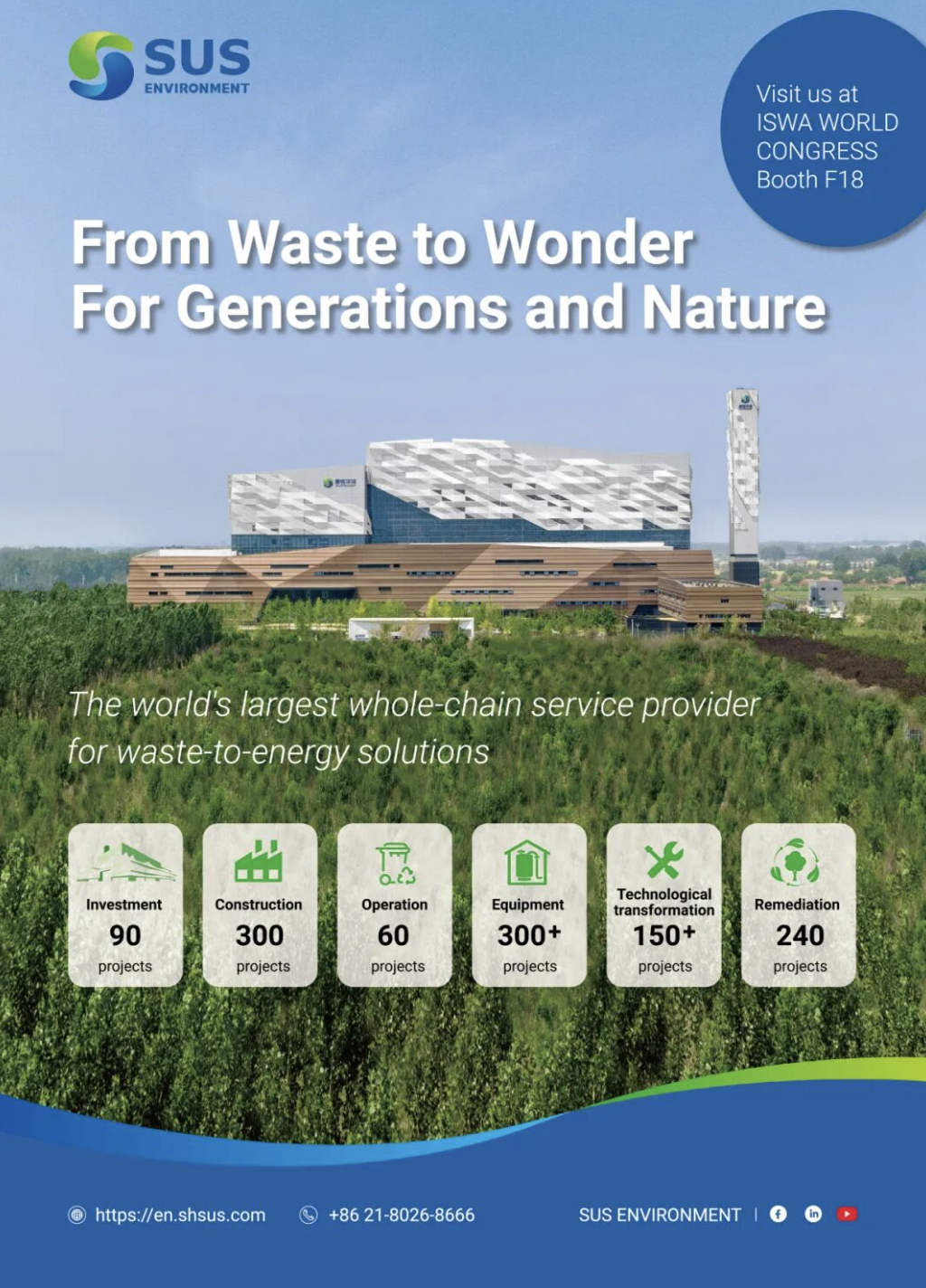
▲《WMW》杂志9月版(2025第三期)封底
编辑:陈伟浩


版权声明: 凡注明来源为“中国水网/中国固废网/中国大气网“的所有内容,包括但不限于文字、图表、音频视频等,版权均属E20环境平台所有,如有转载,请注明来源和作者。E20环境平台保留责任追究的权利。






Copyright © 2000- https://www.h2o-china.com All rights reserved. 中国水网 版权所有
传真:010-88480301
E-mail:hjf@e20.com.cn
本站常年法律顾问:北京市康达律师事务所刘文义律师 京ICP备10040015号-8 京公网安备:11010802035285