

时间:2026-05-21 10:52
来源:康恒环境
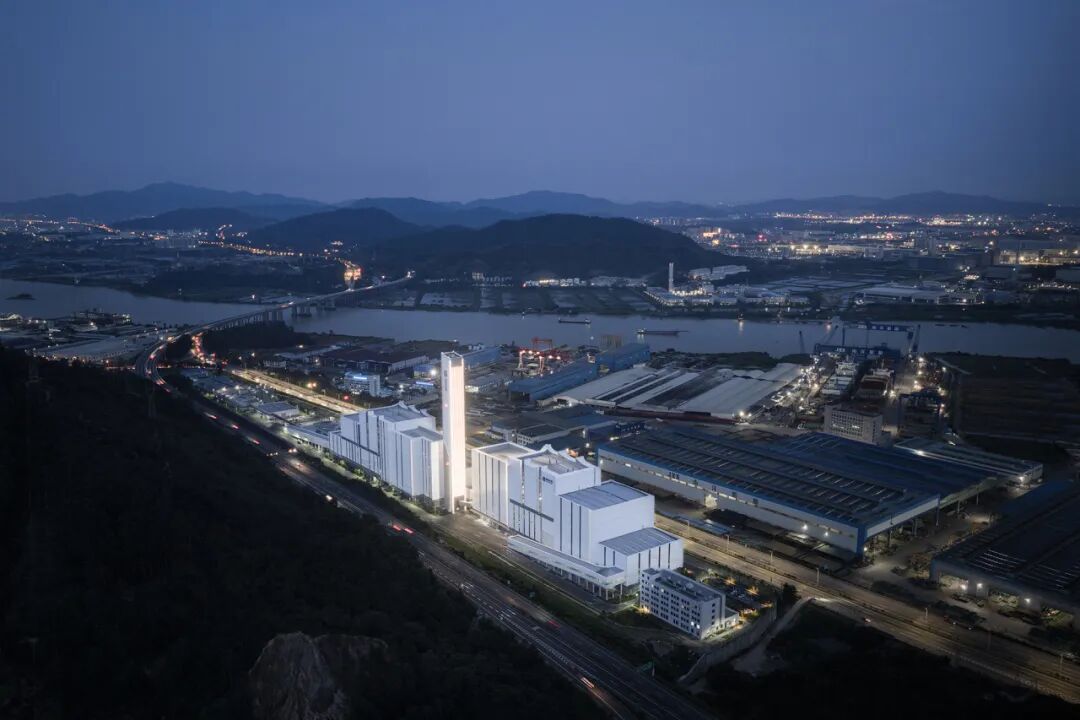
▲ 鸟瞰:交通干线的视觉焦点,Aerial View : Visual Landmark Along Major Transportation Routes ©直译建筑摄影
在广东江门新会区的崖门水道与虎跳门水道交汇处,一座崭新的垃圾焚烧发电厂正以"云帆破浪"的独特姿态,成为入海口最亮眼的城市生态地标。
At the confluence of the Yamen and Hutiaomen waterways in Xinhui District, Jiangmen, Guangdong, a new waste-to-energy plant now stands as the most striking urban eco-landmark at the estuary, with its unique design conception of "Cloud-Sail Charging Through Waves."
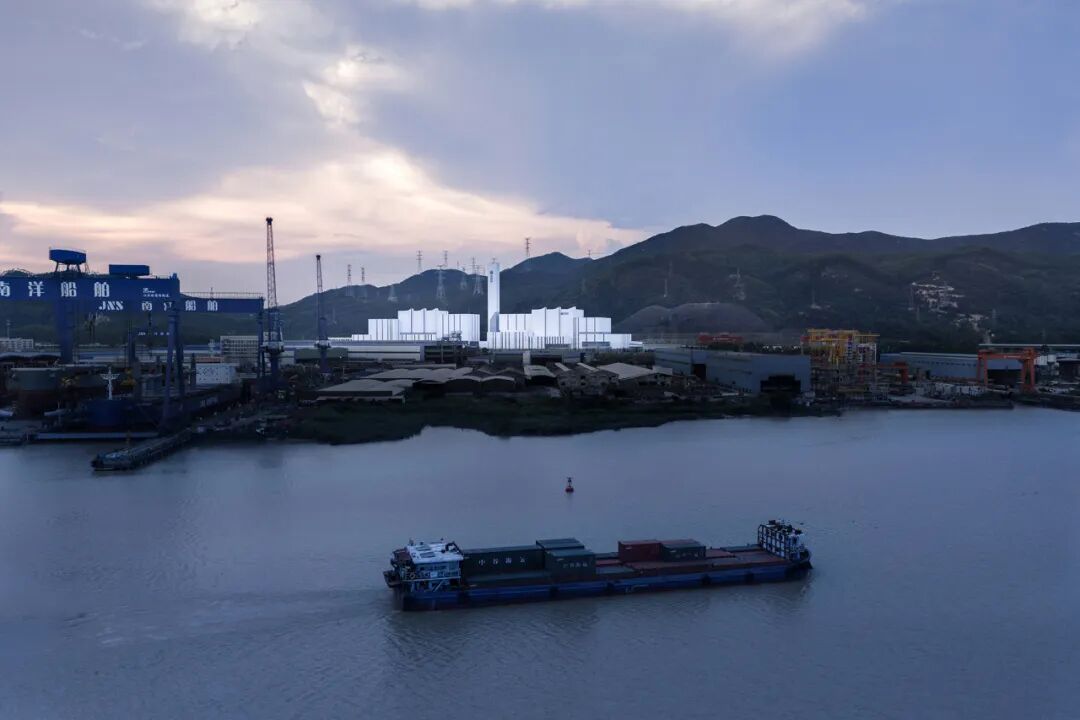
▲ 陆海交汇的区位, Land-Sea Intersection Location ©直译建筑摄影
这座由康恒环境打造的江门新会垃圾焚烧发电厂,不仅是一座日处理量达1,500吨的现代化能源工厂,更是一场"腾笼换鸟"的生态变革——它将一座填埋龄长达15年的垃圾填埋场,转化为资源再生的绿色引擎,实现了土地复用与产业升级的双重突破,更凭借极具美感的建筑外立面造型,成为新会别致的城市形象名片。
Built by SUS ENVIRONMENT, the Jiangmen Xinhui Waste-to-Energy Plant is not merely a modern energy facility processing 1,500 tonnes daily, but an ecological transformation—reclaiming a 15-year-old landfill as a green engine of resource regeneration. It achieves dual breakthroughs in land reuse and industrial upgrading, while its aesthetically striking facade has become Xinhui's distinctive "city identity landmark".
腾笼换鸟:
垃圾填埋场的生态涅槃
Revitalize Old Sites, Embrace New Ecology:
The Ecological Rebirth of Waste Landfills
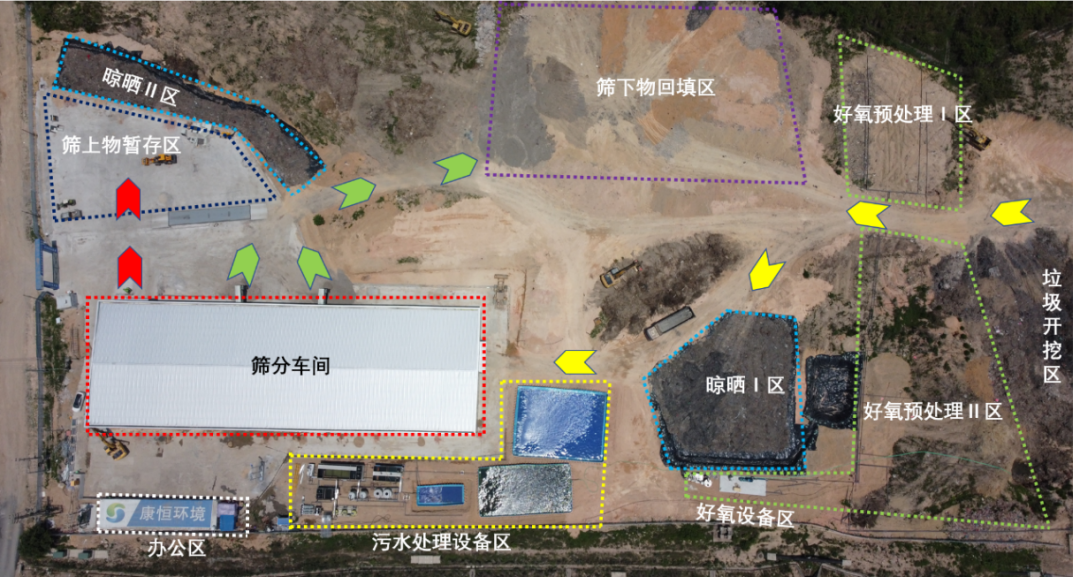
▲ 填埋场修复项目整体布局图,Overall Layout Map for the Landfill Restoration Project
这里曾是城市的"生态伤疤":占地2万平方米的填埋场里,15万立方米的陈腐垃圾堆成小山,渗滤液威胁着周边的水土。如今,康恒环境自主研发的"定制化陈腐垃圾筛分设备"与"快速好氧预处理设备",让这些"沉睡"的城市矿山(陈腐垃圾)重获新生——筛分出的可燃物经焚烧转化为电能,建筑骨料资源化利用,腐殖土满足绿化/园林种植用土的相关标准后场地回用,连6万立方米的污染地下水也被安全净化处理。
Once an "ecological scar" on the city: a 20,000 m² landfill held 150,000 m³ of aged waste piled into hills, with leachate threatening surrounding soil and water. Today, SUS ENVIRONMENT's proprietary "customized aged-waste screening equipment" and "rapid aerobic pre-treatment system" have awakened this dormant "urban mine" (aged waste) to new life—combustibles are converted to electricity through incineration; construction aggregate is recycled as a resource; humus meets landscaping and gardening standards before being reused on-site; and 60,000 m³ of contaminated groundwater has been safely treated.
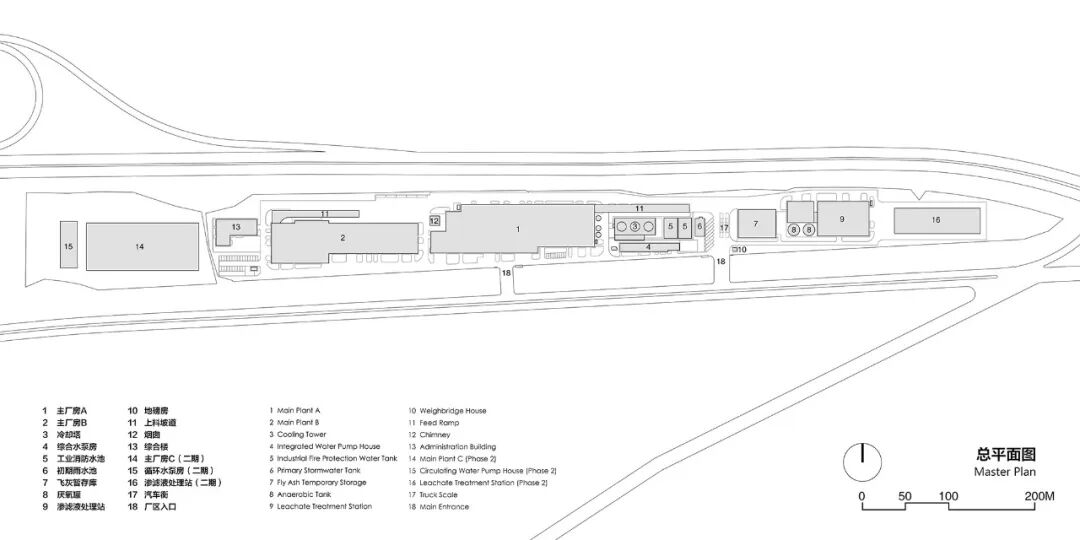
▲ 项目区位图,Site plan ©UUA
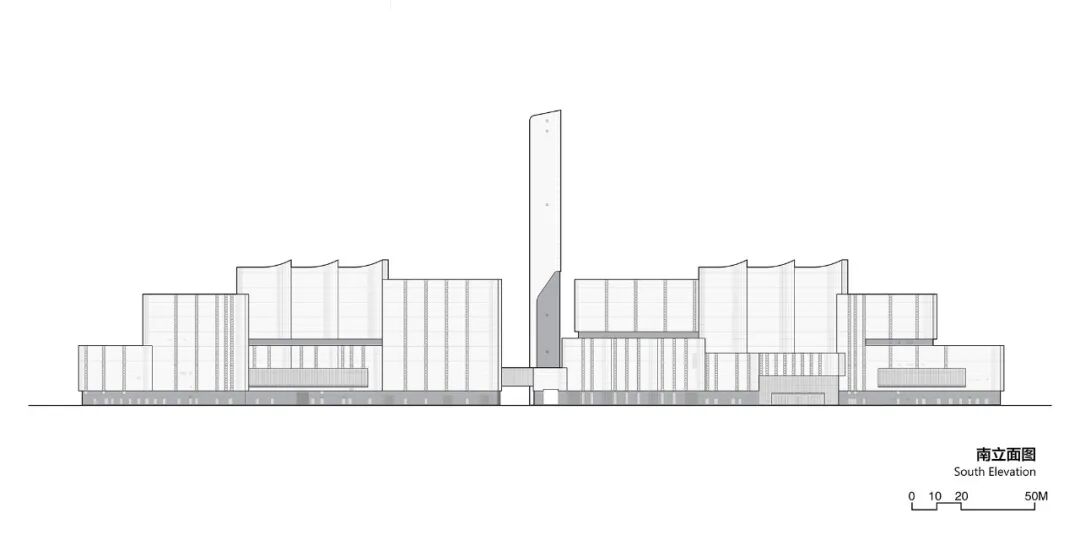
▲ 立面图,Elevation ©UUA
这片土地不仅"腾退"出2万平方米的宝贵空间,更崛起一座日处理1,500吨垃圾的焚烧发电厂,持续守护城市洁净。
从"污染源"到"能源站",康恒环境用技术践行环保初心,通过生态修复与废弃物能源循环,让这片土地重新焕发活力。
The site has not only reclaimed 20,000 m² of valuable land, but now hosts a 1,500-tonne-per-day waste-to-energy plant that continuously protects urban ecological environment.
From "pollution source" to "energy hub," SUS ENVIRONMENT honors its environmental mission through technology, restoring vitality to this land via ecological remediation and waste recycling and energy utilization.
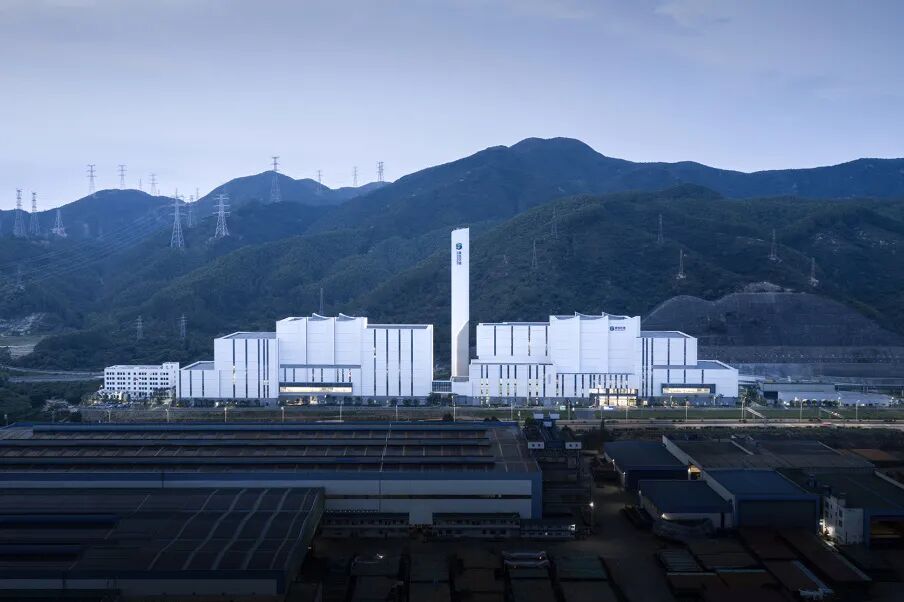
▲ 建筑外景,Exterior of the building ©直译建筑摄影
邻避变邻利:
城市超级符号的诞生
From NIMBY to PIMBY:
The Birth of an Urban Super-Symbol
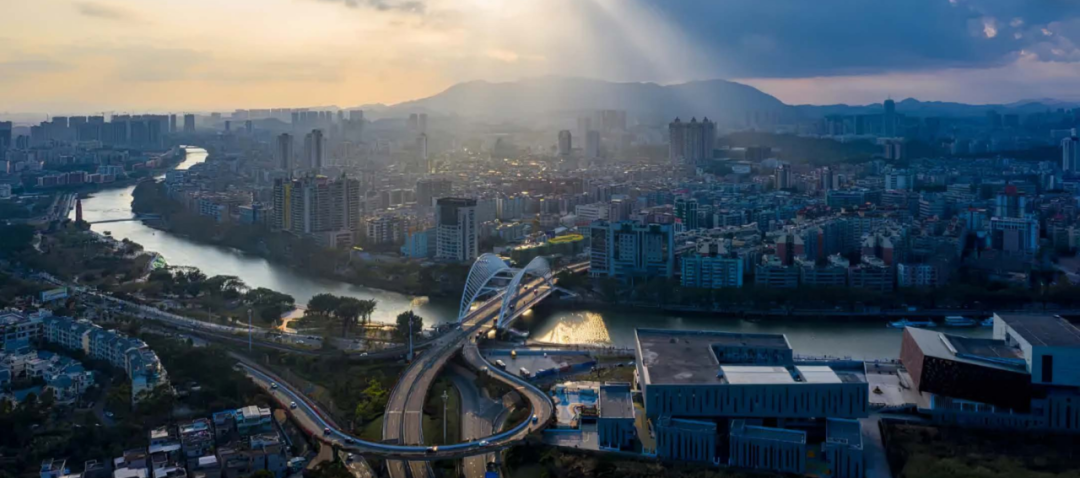

▲ 江门记忆,Jiangmen's historical memory 图源网络 Image source: the internet
江门地处珠江三角洲西部,自古水运发达,是古代海上丝绸之路的重要节点。历史上水面往来的帆影,既是江门的历史记忆,也是城市的超级符号。
Located in western Pearl River Delta, Jiangmen has long been a hub of water transport and a vital node on the ancient Maritime Silk Road. The sails that once dotted its waters are both historical memory and the city's super-symbol.
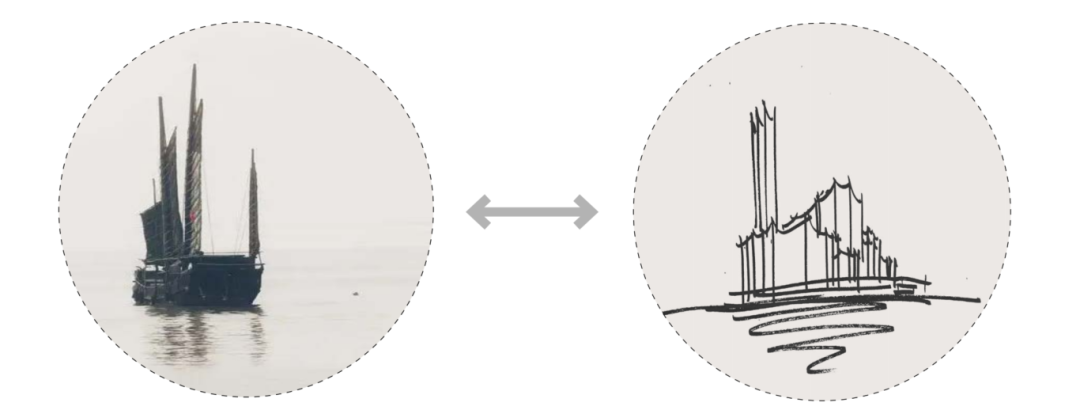
▲ 帆影意向及转译,Sail Shadow Intention and Translation ©UUA
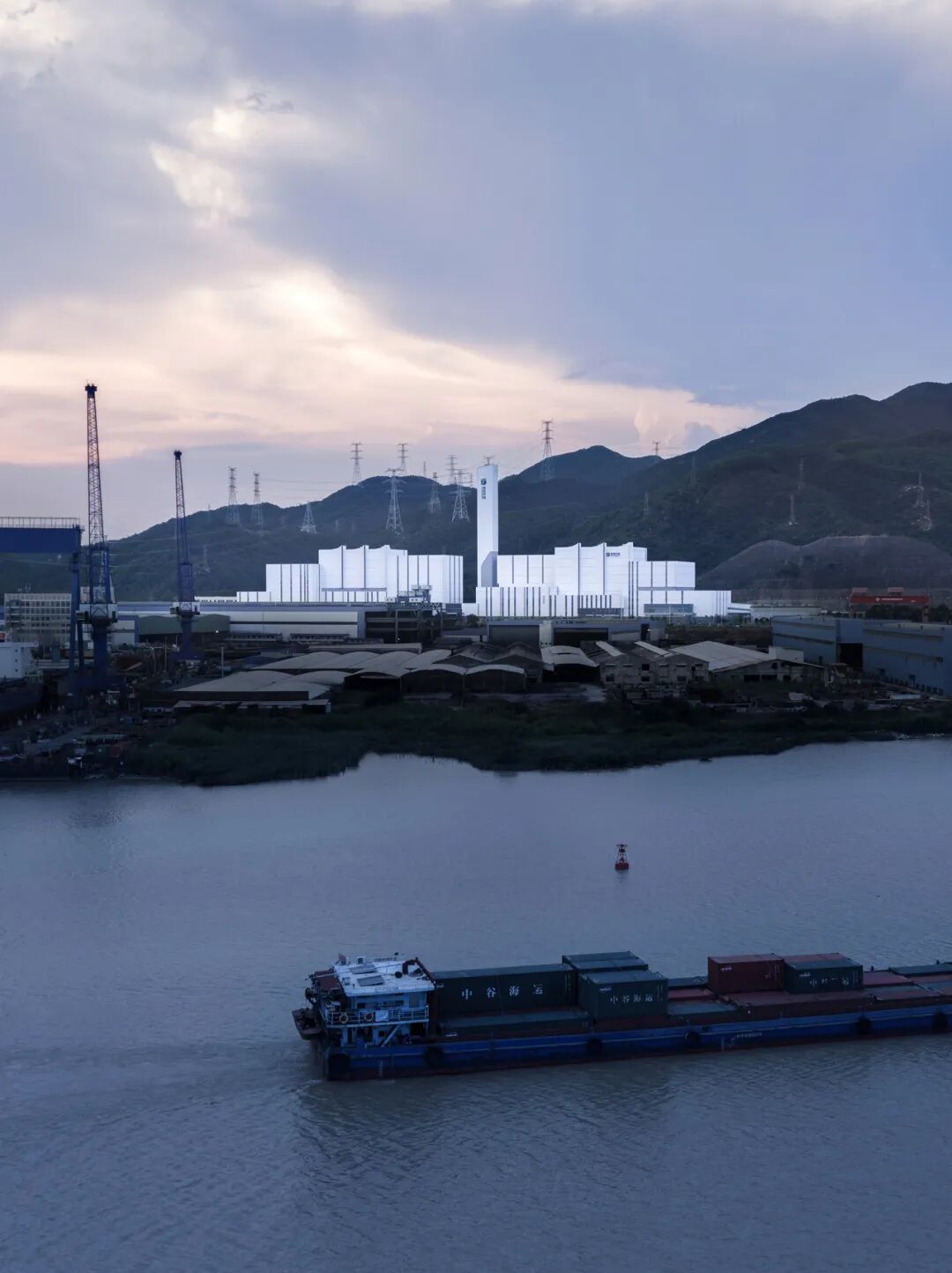
▲ 建筑意向:江门帆影,Architectural Concept : Sailing Silhouettes of Jiangmen ©直译建筑摄影
项目由UUA建筑师事务所操刀设计,从江门的海洋文化中汲取灵感,把风帆作为建筑核心意象——近800米的建筑群如扬起的船帆,在入海口的晨雾中勾勒出优雅的曲线。铝板与玻璃的组合幕墙,在阳光下折射出粼粼波光,仿佛水面泛起的涟漪,营造出层层帆影航行于山海之间的意境。
Designed by United Units Architects (UUA), the project draws inspiration from Jiangmen's maritime culture, the design team adopted sails as the core architectural imagery. The nearly 800-meter-long building cluster stretches along the terrain, resembling billowing sails. The aluminum-and-glass curtain wall refracts shimmering light under the sun, like ripples on water, creating an atmosphere of layered sails navigating between mountains and seas.
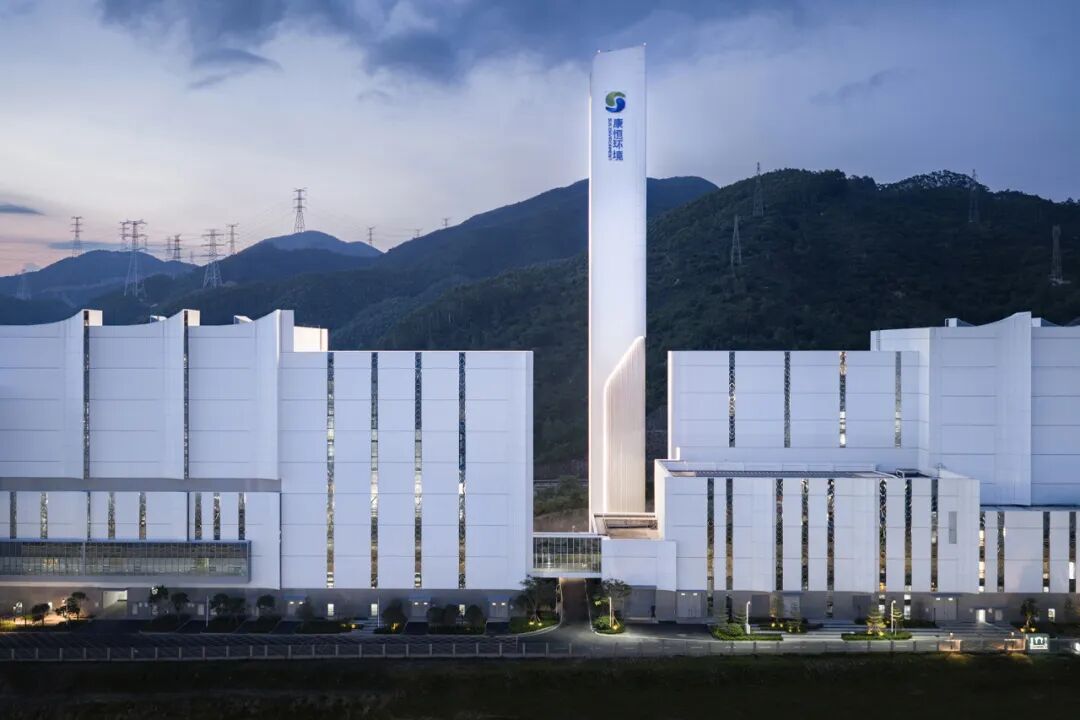
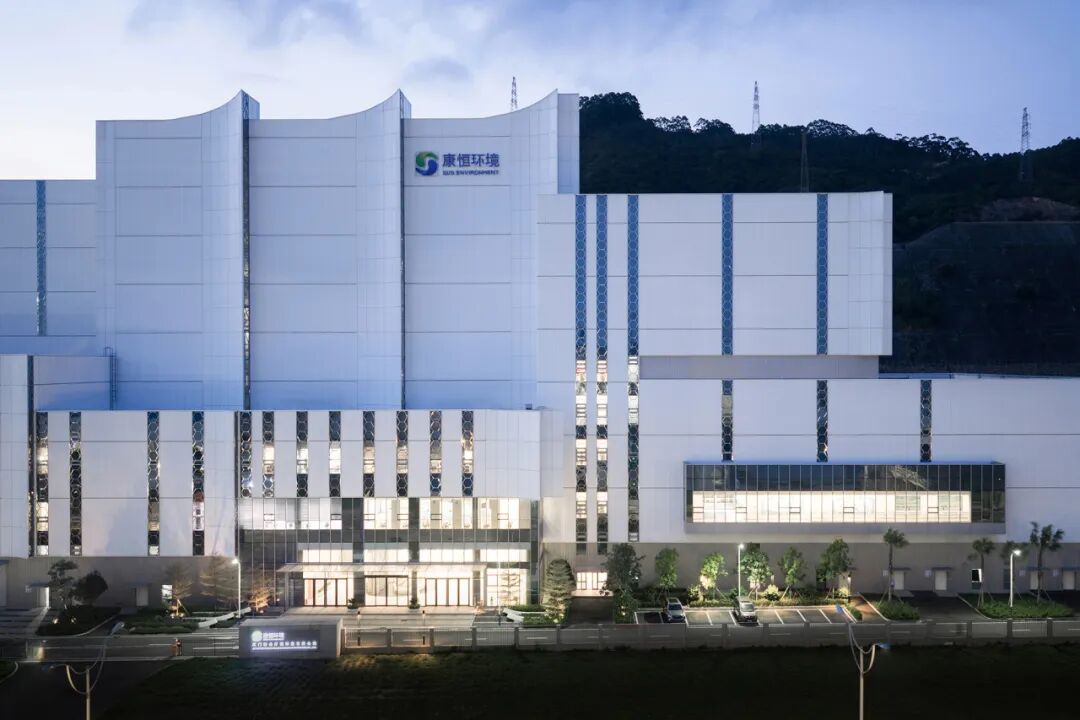
▲ 风帆形态的幕墙组团,Sail-Shaped Curtain Wall Clusters ©直译建筑摄影
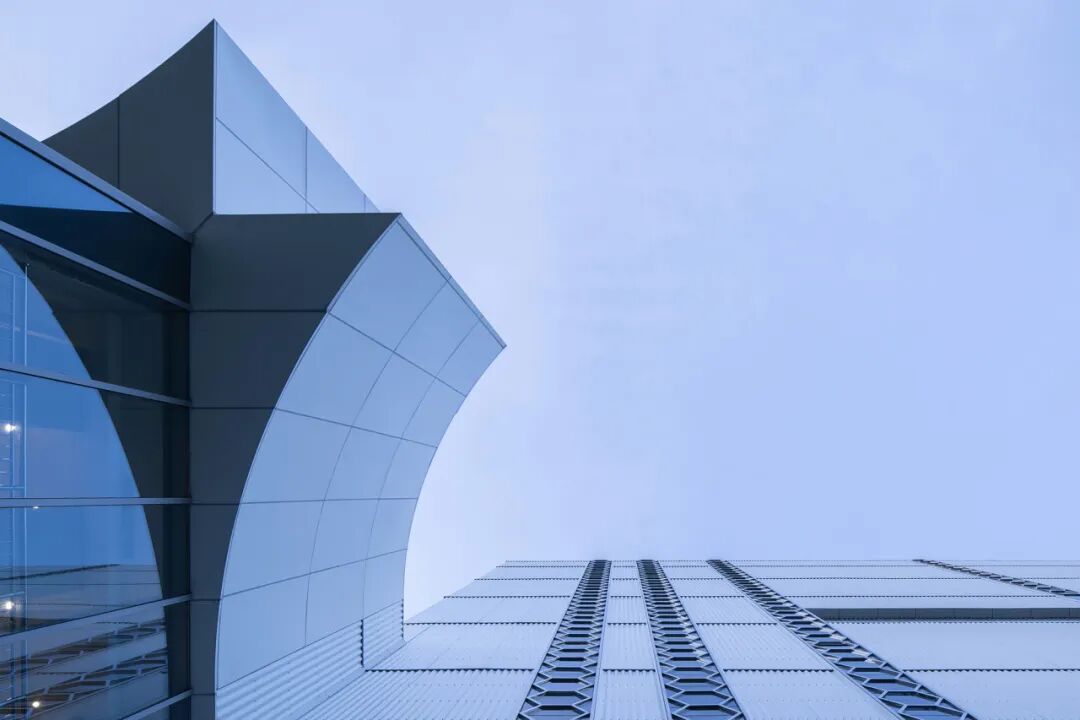
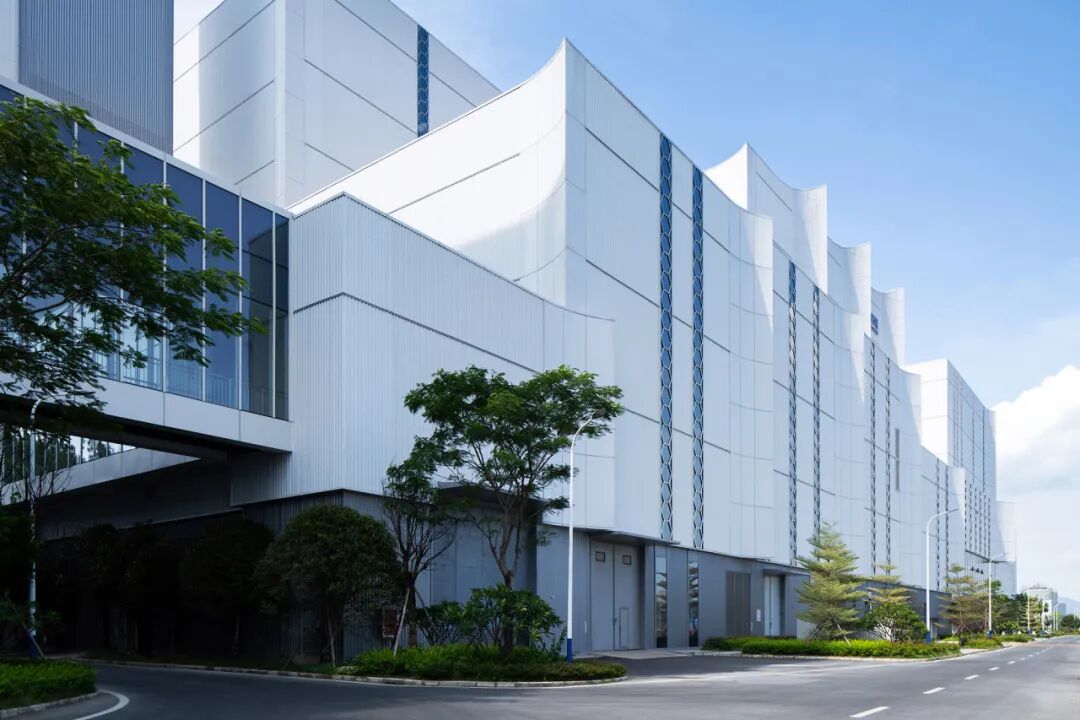
▲ 波浪立面形成富有层次的纵深关系,Undulating façade creating a layered sense of depth ©直译建筑摄影
风帆是一种源自于古人的智慧,将大自然中的风转化为驱动船舶前进的动力;而垃圾焚烧发电是现代人的智慧,将垃圾变废为宝,转化为宝贵的能源。风帆成为一种关于能量转化和利用的隐喻。
这样的设计,不仅兼具美观与内涵,更有效破解了环保设施的"邻避效应"——康恒环境用设计打破偏见:环保设施不必是城市的"异物",它可以是文化的载体、景观的焦点,更可以是市民心中的"骄傲"。
Sails represent ancient wisdom—harnessing wind to propel vessels forward. Waste-to-energy generation represents modern wisdom—transforming trash into treasure. The sail becomes a metaphor for energy conversion and utilization.
This design balances beauty with meaning, breaking the NIMBY effect. SUS ENVIRONMENT uses design to break prejudice: environmental infrastructure need not be an alien object in the city; it can be a cultural vessel, a landscape focal point, and a source of civic pride.
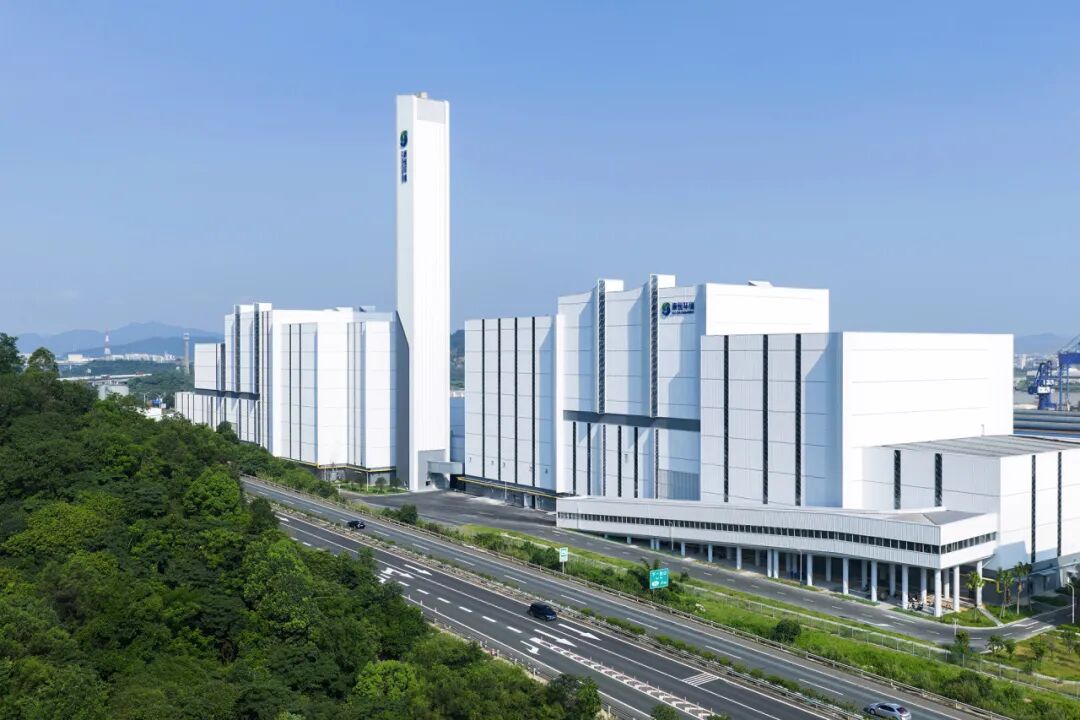
▲ 建筑外景,Exterior of the building ©直译建筑摄影
工业浪漫:
美与功能的共生哲学
Industrial Romance:
The Symbiosis of Aesthetics and Functionality
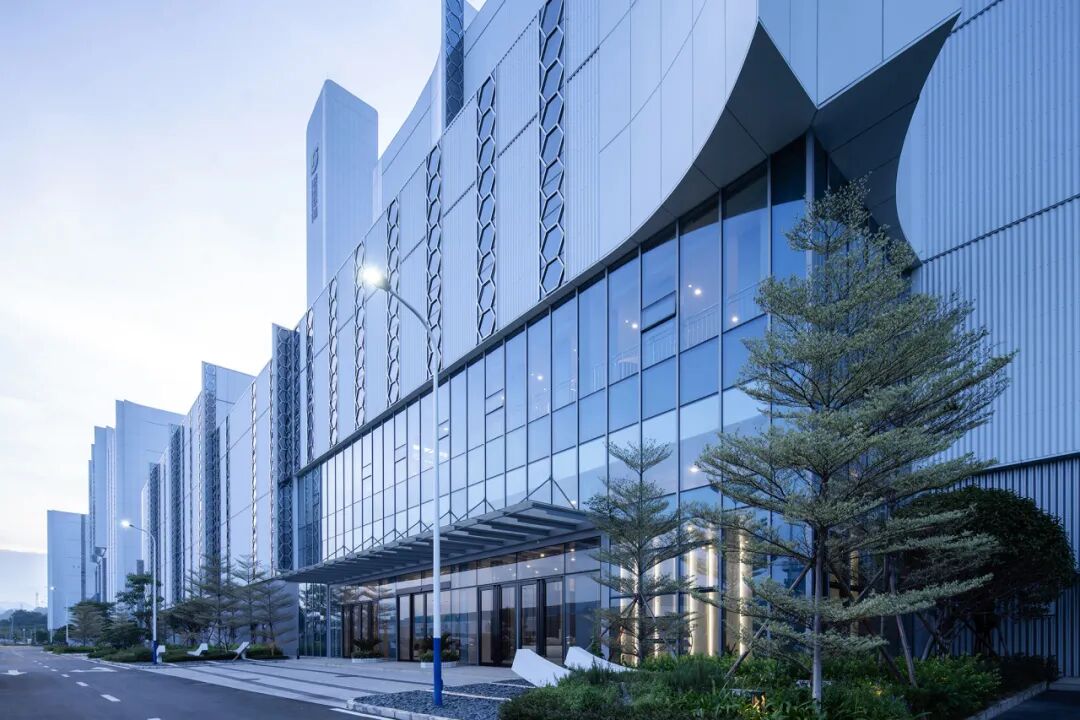
▲ 主墙身全景,Main Facade View ©直译建筑摄影
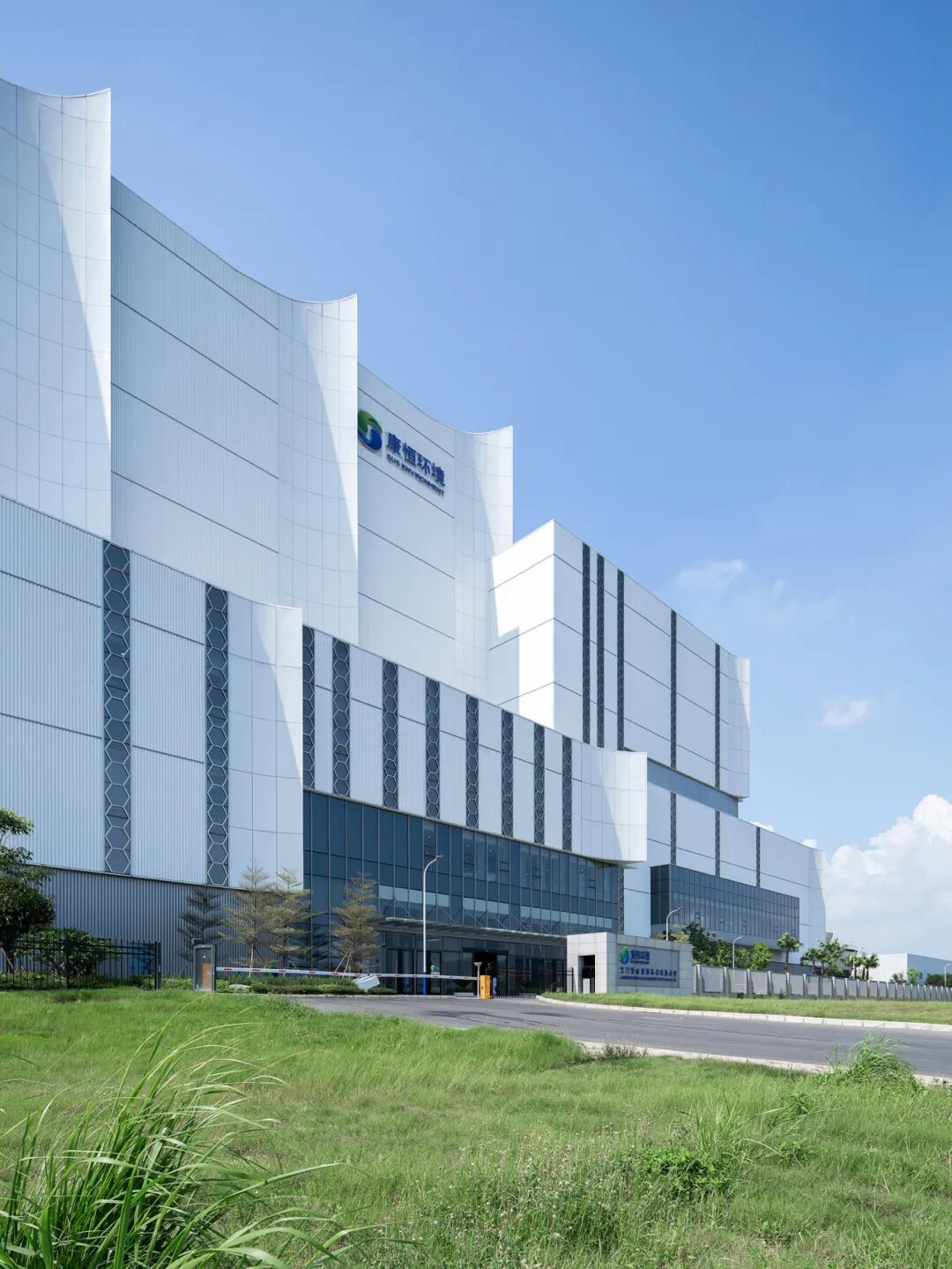
▲ 主厂房墙身,Main Building Facade ©直译建筑摄影
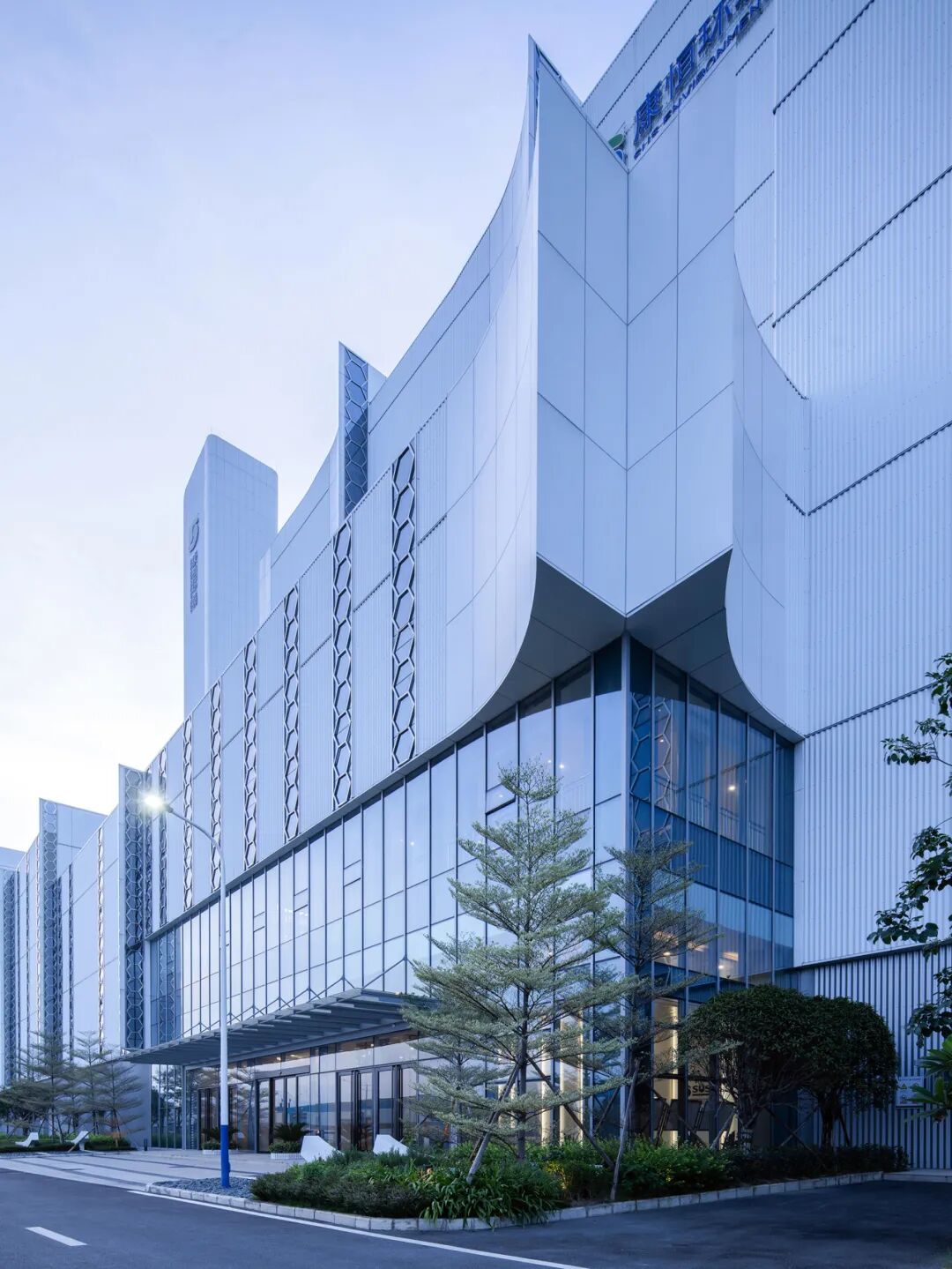
▲ 厂房主入口,Main Entrance of The Plant ©直译建筑摄影
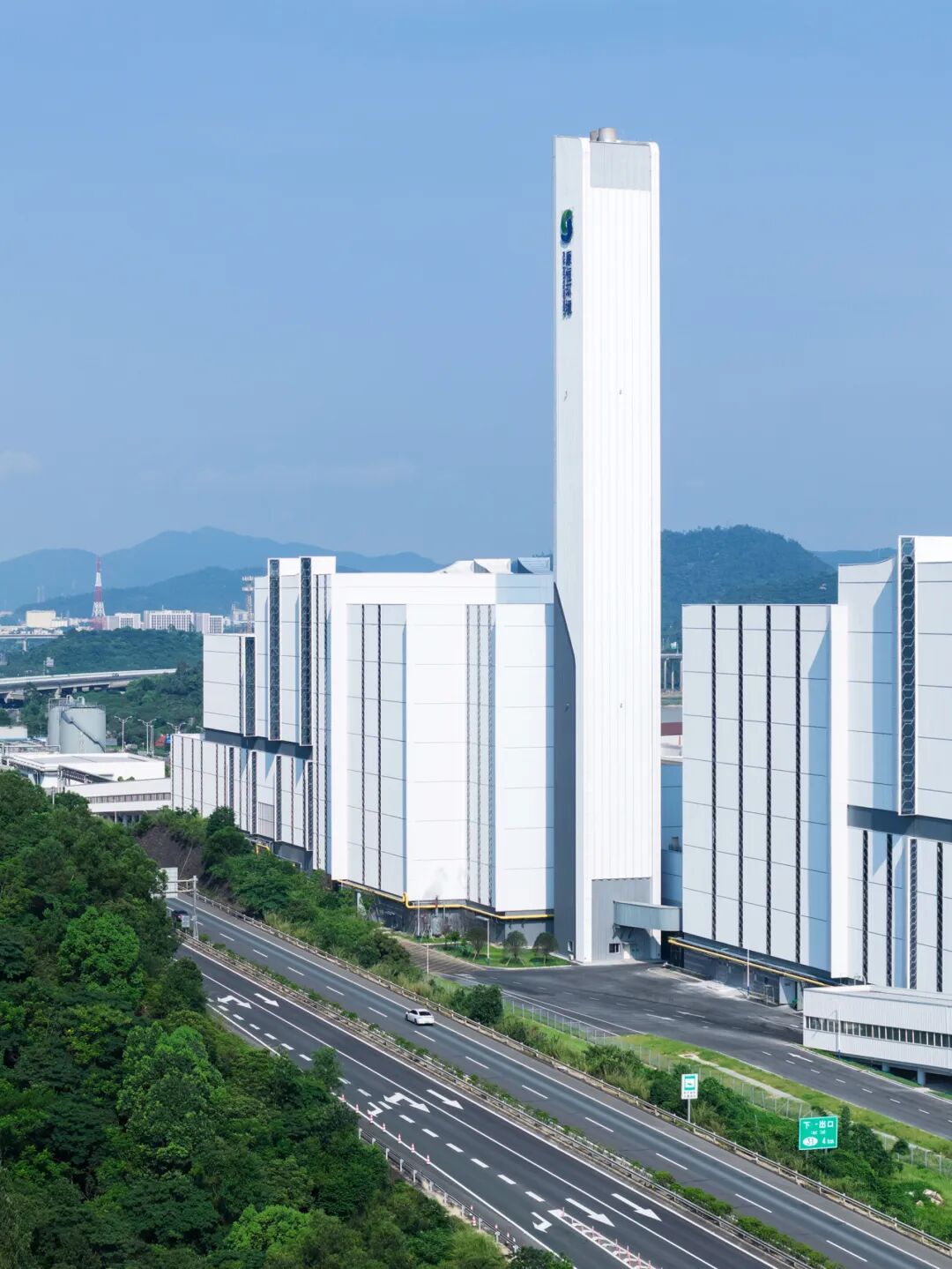
▲ 厂房烟囱,Factory Chimney ©直译建筑摄影
剥开"风帆"的浪漫外衣,电厂的内核是极致的工业理性。
建筑表皮的设计暗藏玄机:幕墙以1m为基本模数,生成四种宽度风帆组团,有效优化建筑外观并控制成本;同时采用白铝板与玻璃组合,形成微妙的肌理变化,为建筑增添细腻层次,兼顾美观、标准化制造与后期维护。
Beneath the romantic sail imagery lies a core of uncompromising industrial rationality.
The facade design features exquisite structural precision: the curtain wall uses 1m as the basic module, generating four sail clusters of varying widths to optimize aesthetics and cost control. White aluminum panels combined with glass create subtle textural variations, adding delicate layers that balance visual appeal, standardized fabrication, and long-term maintainability.
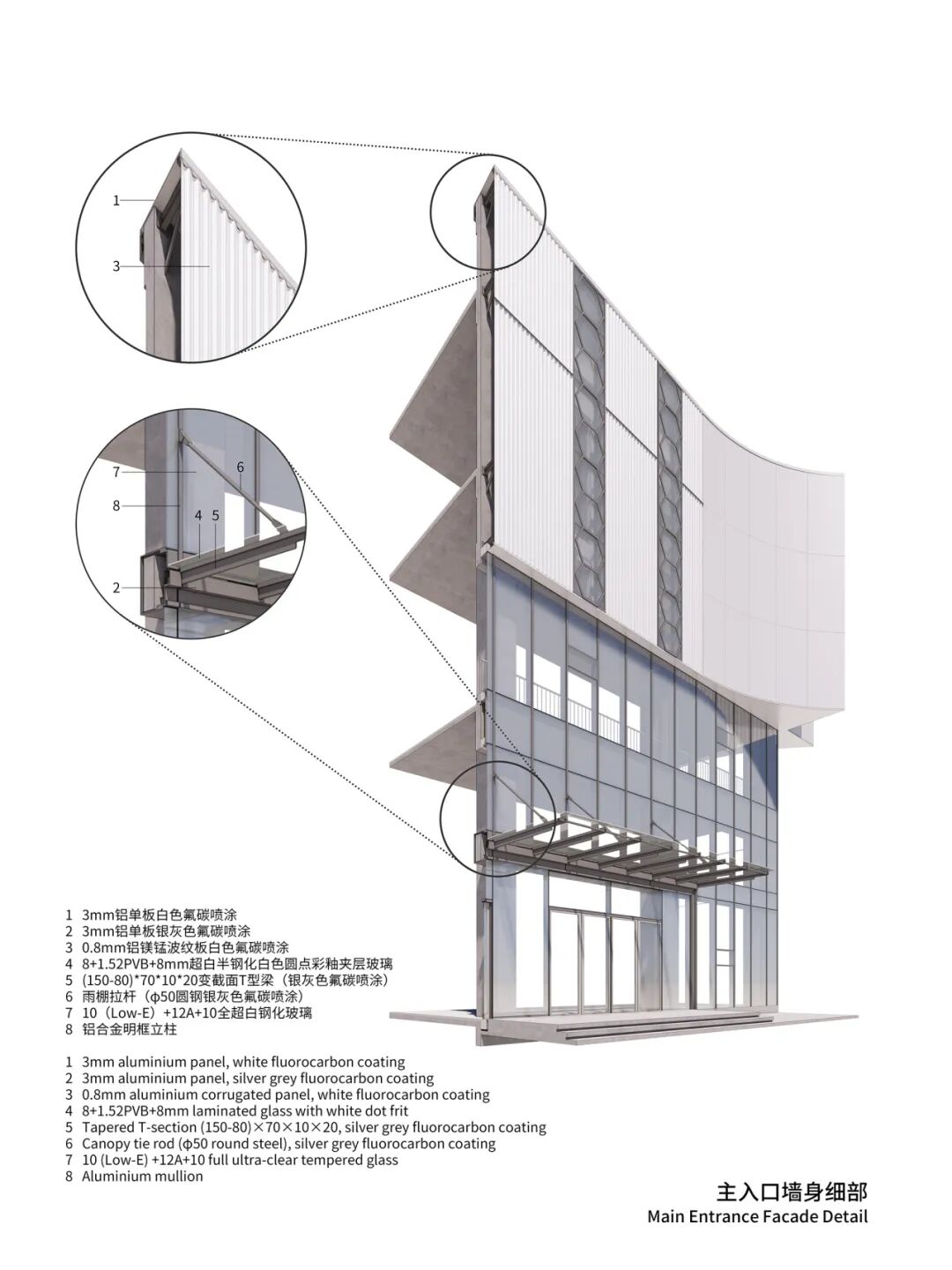
▲ 主入口墙身细部,Main Entrance Facade Detail ©UUA
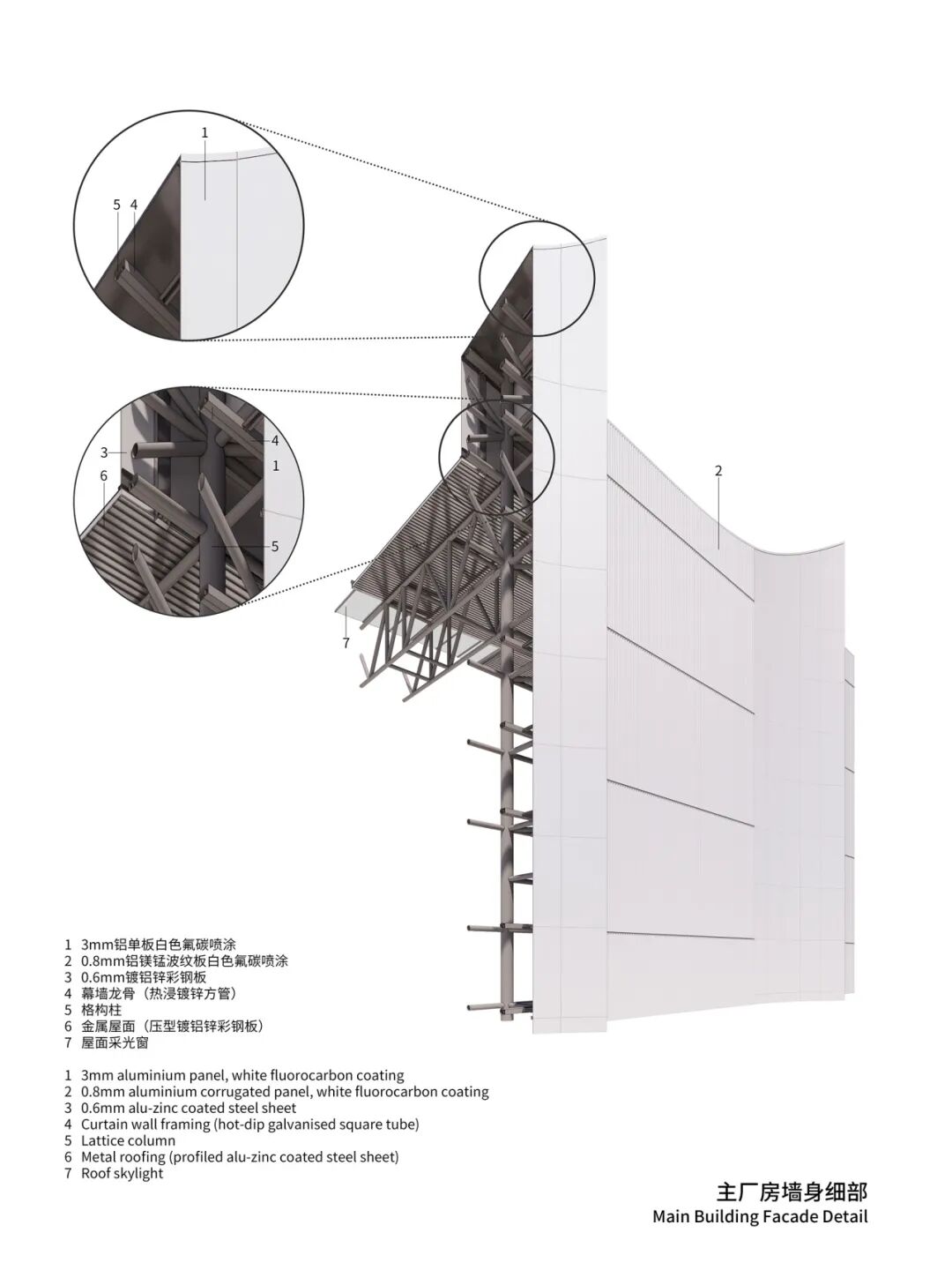
▲ 主厂房墙身细部,Main Building Facade Detail ©UUA
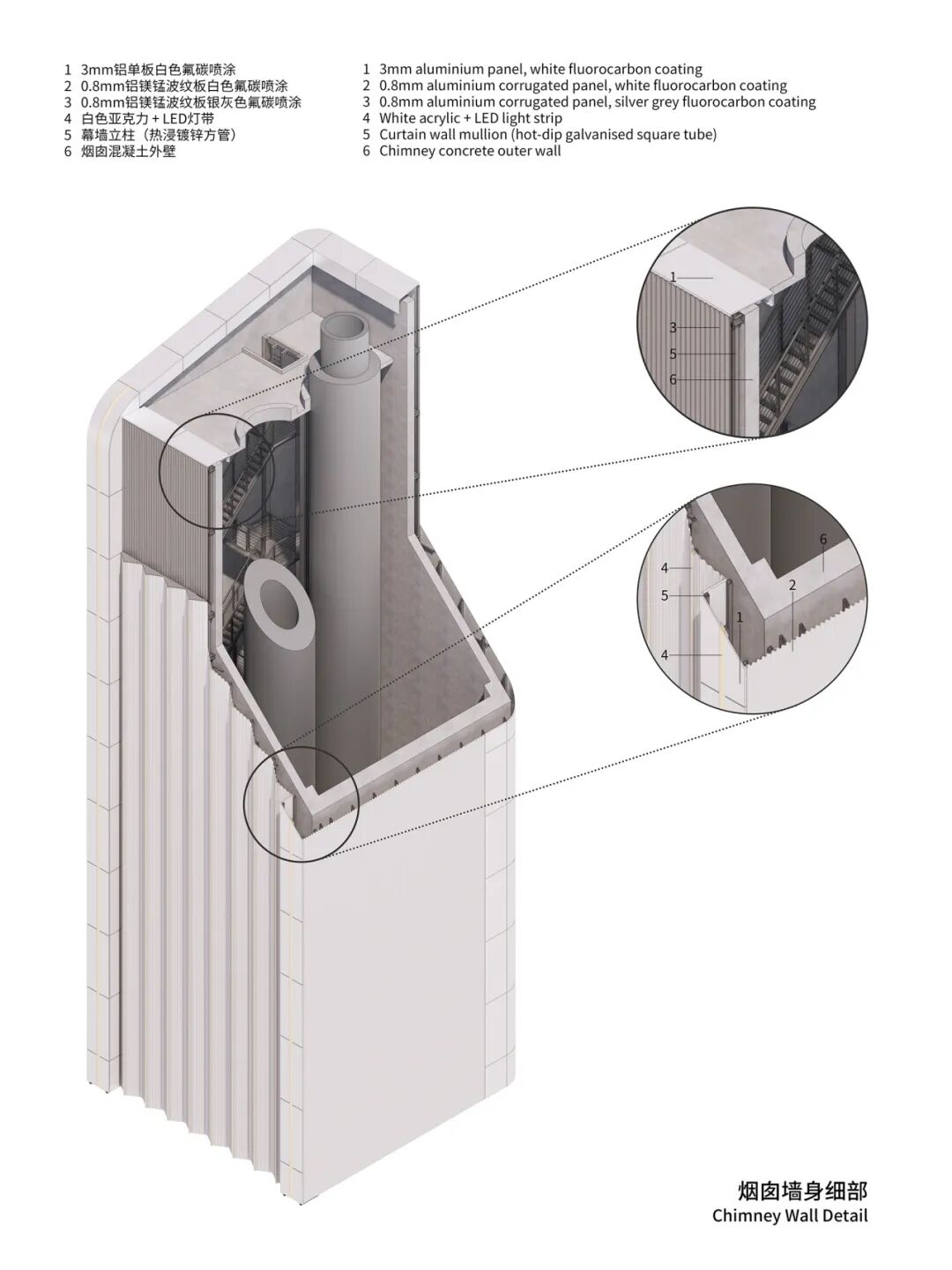
▲ 烟囱墙身细部,Chimney Wall Detail ©UUA
而在这座"美学工厂"内部,垃圾正经历着"变废为宝"的奇幻旅程:每日约1,500吨垃圾进入厂区,从进料口到焚烧炉,从余热锅炉到发电机,每一道工序都被精准控制,最终实现废弃物转化为清洁电能、烟气与污水"零排放",炉渣也被制成建材回用。让环保不再是口号,而是可量化、可感知的现实——它关乎每一度电的清洁,每一滴水的循环,更关乎城市未来的可持续发展。
Inside this "aesthetic factory," waste embarks on a magical journey from trash to treasure. Approximately 1,500 tonnes of waste enter the plant daily, moving from feed hoppers to incinerators, from waste-heat boilers to generators—every process precisely controlled. The result: waste converted to clean electricity, flue gas and wastewater achieve near-zero discharge, and slag repurposed as construction material. Environmental protection becomes not a slogan, but a quantifiable, tangible reality—measured in every clean kilowatt-hour, every recycled drop of water, and every step toward the city's sustainable future.
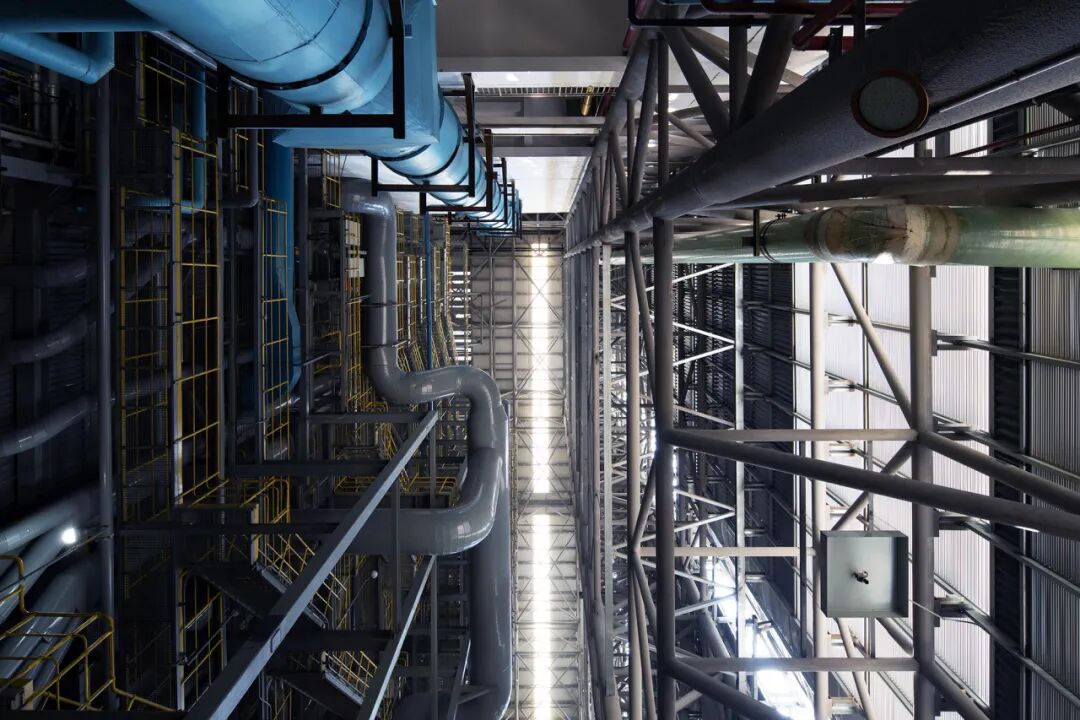
▲ 厂房内部空间, Interior Space of The Plant ©直译建筑摄影
当"风帆"在入海口扬起,我们看到的不仅是工业的浪漫,更是一座城市对绿色未来的承诺。
从柳州的"蜂栖紫荆",到南宁的"峰峦叠翠",再到丝路古城撒马尔罕的"城市名片",康恒环境以一座座高效能、低碳排、超洁净、智慧化以及高颜值的垃圾焚烧发电厂证明:我们不仅是将废弃物转化为永不枯竭的清洁能源,更是在重塑全球绿色城市的生态静脉。
As the sails rise at the estuary, we see not merely industrial romance, but a city's promise to a green future.
From Liuzhou's "Bees Among Bauhinia" to Nanning's "Layered Green Peaks," and to Samarkand's "Urban Icon," SUS ENVIRONMENT proves through every high-efficiency, low-carbon, ultra-clean, intelligent, and visually striking Waste-to-Energy plant: we not only convert waste into inexhaustible clean energy, but reshape the eco-veins of green cities worldwide.
编辑:赵凡


版权声明: 凡注明来源为“中国水网/中国固废网/中国大气网“的所有内容,包括但不限于文字、图表、音频视频等,版权均属E20环境平台所有,如有转载,请注明来源和作者。E20环境平台保留责任追究的权利。






Copyright © 2000- https://www.h2o-china.com All rights reserved. 中国水网 版权所有
传真:010-88480301
E-mail:hjf@e20.com.cn
本站常年法律顾问:北京市康达律师事务所刘文义律师 京ICP备10040015号-8 京公网安备:11010802035285